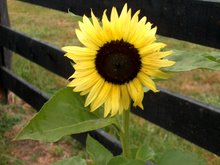
The students at Hampshire School are starting our plants in the Vocational Education greenhouse. There are several farms that do this locally. We stopped by the greenhouse for a look at how things are progressing. The plants are coming along very nicely.
Monday, March 05, 2007
2007 Vegetable Plants
The students at Hampshire School are starting our plants in the Vocational Education greenhouse. There are several farms that do this locally. We stopped by the greenhouse for a look at how things are progressing. The plants are coming along very nicely.
A Traditional Harbinger of Spring
Washington Post Article about cattle antibiotic
FDA Rules Override Warnings About Drug
Cattle Antibiotic Moves Forward Despite Fears of Human Risk
Wednesday, February 28, 2007
WV Farmers Market Listing, Seasonal Sites

I came across two interesting web sites for seasonal and local foods. They are Seasonal Recipes and Seasonal Chef. The Seasonal Chef Site had a good listing of nationwide Farmers Markets including our very own Romney, WV market. The complete WV farmers market list is here. I noted that there were many more WV listings than were listed last year. Local farmers markets are really catching on in WV and nationwide as the web continues to spread the word on the local foods movement.
Tuesday, February 13, 2007
.1 Acres and Independence
The well-read kitchen gardener is familiar with the classic homesteading guide "Five Acres and IndependenceVery few of us have five acres or even one for that matter. The Dervaes family of Pasadena is proving that what you lack in land can be more than made up for with creativity and passion. Their urban family farm, built on an ordinary city lot, yields 6,000 pounds of fruits and vegetables each year. They were recently featured in the Los Angeles Times. Below is a shorter "how to" article that went along with the feature.
For more info about the Dervaes and their farm, please see: www.pathtofreedom.com
Novice's Guide to an Urban Homestead
By Joe Robinson, published in the Los Angeles Times, January 25, 2007
FARMING is inherently an optimistic act, a belief that you and your hands can make something happen, even if you couldn't last year. That's a good thing, because nurturing your crops to a fruitful harvest can take some trial and error as you find the right mix of soil, sun and weather exposure. Plants sensitive to cold, for instance, may grow better close to the house, where it may be warmer than in the rest of the yard.
Jules Dervaes suggests starting your micro-farm with just a few plants, hardy ones that will do well even for rookie green thumbs. Start with some herbs, such as basil, and tomatoes. And even the horticulturally challenged can triumph with squash.
You'll want to spend serious time upfront getting the soil right. "If you don't have healthy soil, you don't have healthy plants," he says. Think in terms of feeding the soil as much as the plant, with a regimen that includes mulching and compost.
As you add more plants, you have to be imaginative in maximizing space. Dervaes and his three adult children use trellises along the walls and down the center of the backyard for snow peas and flowers. In one optimizing technique traditionally used by Native American gardeners, they combine several plants in a "three sisters" bed — black Mexican/Aztec corn, cornfield beans and winter squashes with a cover crop of mustard. The family has a portable corridor of crops grown in pots they can rotate depending on the season.
Because of space limitations, home farmers need to pick their plants carefully, going for harder-to-find items that can fetch a premium price, Dervaes says. That means you need quality customers who will choose taste over price.
His family started with flowers, selling them to local stores. Building on that success, they hit the streets to see whether their salad greens could find a market. They discovered that getting their products taste-tested by the chef got them on the table. It's possible to break through to the restaurant market, Dervaes says, because owners are always looking for freshness.
Customers have to be able to adapt to your micro-supplies. The Dervaeses have had to limit sales to customers who can adjust to their crop availabilities and quantities.
Dervaes suggests that would-be urban homesteaders first try in a small way at a community garden or by selling to churches or schools. If you want some up-close advice, he holds evening classes in the warm months in everything from gardening to making your own biodiesel.
If at first you don't succeed, keep going back to the drawing board, he says. "There's failing, but when you climb to the top of the mountain, you feel pretty good."
Michael Pollan's Nine-Step Program
1. Eat food. Though in our current state of confusion, this is much easier said than done. So try this: Don’t eat anything your great-great-grandmother wouldn’t recognize as food. (Sorry, but at this point Moms are as confused as the rest of us, which is why we have to go back a couple of generations, to a time before the advent of modern food products.) There are a great many foodlike items in the supermarket your ancestors wouldn’t recognize as food (Go-Gurt? Breakfast-cereal bars? Nondairy creamer?); stay away from these.
2. Avoid even those food products that come bearing health claims. They’re apt to be heavily processed, and the claims are often dubious at best. Don’t forget that margarine, one of the first industrial foods to claim that it was more healthful than the traditional food it replaced, turned out to give people heart attacks. When Kellogg’s can boast about its Healthy Heart Strawberry Vanilla cereal bars, health claims have become hopelessly compromised. (The American Heart Association charges food makers for their endorsement.) Don’t take the silence of the yams as a sign that they have nothing valuable to say about health.
3. Especially avoid food products containing ingredients that are a) unfamiliar, b) unpronounceable c) more than five in number — or that contain high-fructose corn syrup.None of these characteristics are necessarily harmful in and of themselves, but all of them are reliable markers for foods that have been highly processed.
4. Get out of the supermarket whenever possible. You won’t find any high-fructose corn syrup at the farmer’s market; you also won’t find food harvested long ago and far away. What you will find are fresh whole foods picked at the peak of nutritional quality. Precisely the kind of food your great-great-grandmother would have recognized as food.
5. Pay more, eat less. The American food system has for a century devoted its energies and policies to increasing quantity and reducing price, not to improving quality. There’s no escaping the fact that better food — measured by taste or nutritional quality (which often correspond) — costs more, because it has been grown or raised less intensively and with more care. Not everyone can afford to eat well in America, which is shameful, but most of us can: Americans spend, on average, less than 10 percent of their income on food, down from 24 percent in 1947, and less than the citizens of any other nation. And those of us who can afford to eat well should. Paying more for food well grown in good soils — whether certified organic or not — will contribute not only to your health (by reducing exposure to pesticides) but also to the health of others who might not themselves be able to afford that sort of food: the people who grow it and the people who live downstream, and downwind, of the farms where it is grown.
“Eat less” is the most unwelcome advice of all, but in fact the scientific case for eating a lot less than we currently do is compelling. “Calorie restriction” has repeatedly been shown to slow aging in animals, and many researchers (including Walter Willett, the Harvard epidemiologist) believe it offers the single strongest link between diet and cancer prevention. Food abundance is a problem, but culture has helped here, too, by promoting the idea of moderation. Once one of the longest-lived people on earth, the Okinawans practiced a principle they called “Hara Hachi Bu”: eat until you are 80 percent full. To make the “eat less” message a bit more palatable, consider that quality may have a bearing on quantity: I don’t know about you, but the better the quality of the food I eat, the less of it I need to feel satisfied. All tomatoes are not created equal.
6. Eat mostly plants, especially leaves. Scientists may disagree on what’s so good about plants — the antioxidants? Fiber? Omega-3s? — but they do agree that they’re probably really good for you and certainly can’t hurt. Also, by eating a plant-based diet, you’ll be consuming far fewer calories, since plant foods (except seeds) are typically less “energy dense” than the other things you might eat. Vegetarians are healthier than carnivores, but near vegetarians (“flexitarians”) are as healthy as vegetarians. Thomas Jefferson was on to something when he advised treating meat more as a flavoring than a food.
7. Eat more like the French. Or the Japanese. Or the Italians. Or the Greeks. Confounding factors aside, people who eat according to the rules of a traditional food culture are generally healthier than we are. Any traditional diet will do: if it weren’t a healthy diet, the people who follow it wouldn’t still be around. True, food cultures are embedded in societies and economies and ecologies, and some of them travel better than others: Inuit not so well as Italian. In borrowing from a food culture, pay attention to how a culture eats, as well as to what it eats. In the case of the French paradox, it may not be the dietary nutrients that keep the French healthy (lots of saturated fat and alcohol?!) so much as the dietary habits: small portions, no seconds or snacking, communal meals — and the serious pleasure taken in eating. (Worrying about diet can’t possibly be good for you.) Let culture be your guide, not science.
8. Cook. And if you can, plant a garden. To take part in the intricate and endlessly interesting processes of providing for our sustenance is the surest way to escape the culture of fast food and the values implicit in it: that food should be cheap and easy; that food is fuel and not communion. The culture of the kitchen, as embodied in those enduring traditions we call cuisines, contains more wisdom about diet and health than you are apt to find in any nutrition journal or journalism. Plus, the food you grow yourself contributes to your health long before you sit down to eat it. So you might want to think about putting down this article now and picking up a spatula or hoe.
9. Eat like an omnivore. Try to add new species, not just new foods, to your diet. The greater the diversity of species you eat, the more likely you are to cover all your nutritional bases. That of course is an argument from nutritionism, but there is a better one, one that takes a broader view of “health.” Biodiversity in the diet means less monoculture in the fields. What does that have to do with your health? Everything. The vast monocultures that now feed us require tremendous amounts of chemical fertilizers and pesticides to keep from collapsing. Diversifying those fields will mean fewer chemicals, healthier soils, healthier plants and animals and, in turn, healthier people. It’s all connected, which is another way of saying that your health isn’t bordered by your body and that what’s good for the soil is probably good for you, too.
Thursday, February 08, 2007
Poultry and Egg Prices (Updated 3/2008)
Chicken Eggs - Ungraded, but generally large/jumbo ............. $2.50 per dozen
** Chicken eggs available year round **
USDA nutrient data findings for eggs from free range/pastured chickens compared to confinement chickens showed they were up to twice as rich in Vitamin E, up to six times richer in beta carotene (a form of Vitamin A) in their yolks and four times richer in essential omega-3 fatty acids. And the free range eggs averaged only half as much cholesterol. Source: www.motherearthnews.com/eggs
Poultry
Chicken: broilers/roasters
Whole chicken - Generally 4 to 6 pounds...........$3.00 per pound
Liver/Hearts/Gizzards.........................................$2.00 per pound
Chicken: stewing/soup birds
Whole chicken - Generally 3 -4 pounds................$1.50 per pound
According to the USDA Sustainable Agriculture and Research Ed program, pastured poultry has 21% less total fat, 30% less saturated fat, and 28% fewer calories than conventionally raised poultry. Pastrured poultry also contains 50% more vitamin A and 100% more Omega 3s. Source: www.eatwild.com
** Chicken available from May through October **
Heritage Turkey
Heritage Turkeys: Generally 15 - 25 pounds.....................$5.00 per pound
** Turkeys available in November **
Please place your orders as soon as possible to assure we can meet your requirements.
Saturday, February 03, 2007
First YouTube Video Post
Wednesday, January 17, 2007
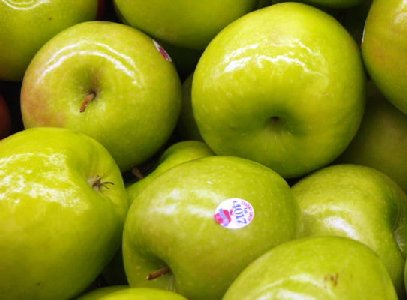
Is there really a Granny Smith?
I knew that Granny Smith apples had been around a while, but not since the late 1800's!Who was the mysterious matron of the green apple? Cathy's Apple Page states Granny Smith was an Australian woman who stumbled on her famous variety after throwing out a bunch of apples in the mid-19th century. As the story goes, from this pile of bad apples a young tree sprung, bearing a light green fruit that was tart but not excessively sour. The new strain of apple could also withstand lengthy bouts of storage and shipping.
The story is true, mostly. The city of Ryde in New South Wales, Australia, hosts her official biography. Born in 1799 in Sussex, England, Maria Ann Sherwood emigrated with her husband Thomas Smith to Australia in 1838 to plant orchards in the new Australian colony.
Granny Smith developed her famous fruit late in life. Her distinctive green apple came from a seedling tree that had grown from the remains of "some French crab apples grown in Tasmania." She never lived to see its success. In 1870, just two years before folks began cultivating her new seedling tree, she passed away. Granny Smith apples won first prize in a local agricultural fair in 1891, and five years later they were being shipped around the world.
Source: http://ididnotknowthatyesterday.blogspot.com
Tuesday, January 16, 2007
New WV Grown Logo

The WV Department of Agriculture has released a new logo entitled West Virginia Grown. Its a very attractive mostly blue logo and every bit as appealing as a few that other states are using. So WV is now getting behind the local foods movement in a good way. I'm sure you'll be seeing this logo a lot around the state at various markets and stores. We'll likely use it at farmers markets, in marketing flyers, and its already on our web site in a few places (www.churchviewfarm.info)