Tuesday, December 26, 2006


Omnivore's Dilemma by Michael Pollan
I've now read all of Michael Pollan's books including Second Nature, A Place of My Own, and The Botany of Desire. I've just finished his latest book, Omnivores' Dilemma and if you are at all interested in what you eat daily, I would highly recommend this book. The book is basically divided into three sections. 1) Industrial-Corn which describes the corn based agricultural economy which ends in a fast food meal, 2) Pastoral-Grass which describes a pasture based agricultural system and 3) Personal-The Forest which is a foraging based system. The key is to recognize which system you are working within at any given time. This is a highly detailed, informative and thought provoking book. With every meal, you are operating within one of these systems. The industrial system is clearly the least healthy and the most environmentally damaging. The Personal system is based upon consuming what is available locally and currently in season. The pastoral system is in the middle and maintains the health of the land which producing items such as chicken, beef and pork. This winter as you catch up on your reading, I would highly recommend Omnivores Dilemma as very worthy of your time.
Thursday, December 14, 2006
Why WV? - Jonathan Jessup Photos
 I finally found an effective way to introduce folks to WV and to attempt to explain to them the beauty of WV. Photographer Jonathan Jessup provides all the required beautiful imagery. Below, I've cut and pasted text from his recent email which contain links to a slideshow he has done as well as a video in which he describes the process required to do his art. He describes the actions required to be "in nature" and capture some of the experience in his photographs. The YouTube video is just an incredible way to hear an artist such as Jonathan describe the creative process. Enjoy his slideshow, video, and professional website.
From Jonathan Jessup's Email:
Hello! I hope you are well this holidays! I've made a slideshow video that is linked at the top of my home page now. If you haven't already seen it, do check it out when you can. It may only work over a broadband Internet connection however.
Here is a direct link to the video:
http://youtube.com/watch?v=qlsFVuX6qTs
I've also made another video to perhaps enhance your experience and appreciation of nature, while in the wilderness and in nature. It is also linked to from my home page.
Here is a direct link:
http://youtube.com/watch?v=pLoBrVPyKcw
Michael Pollan NY Times Article - "Power Steer"

Many of the folks we know would not consume feedlot beef or confinement raised chicken or pork. This Michael Pollan article discusses a case study of a feed lot beef steer that he purchased and followed through the production system. Some alarming info about consumption of antibiotics, growth hormones and ecoli. His books and articles are very detailed and thorough and they can take some time to study. Grass fed beef, chicken, and pork have none of the issues that feedlot animals do. This is an excellent reference article that I wanted to share.
Wednesday, November 08, 2006
World's Healthiest Foods
I just discovered the Belly Bytes Website at another blog site and they referenced the following very informative article. Check out their web site at www.bellybytes.com for useful info and you can also subscribe to their updates.
The 29 Healthiest Foods on the Planet
The following is a "healthy food hot list" consisting of the 29 food that will give you the biggest nutritional bang for you caloric buck, as well as decrease your risk for deadly illnesses like cancer, diabetes and heart disease. Along with each description is a suggestion as to how to incorporate these power-foods into your diet.FRUITS
01. Apricots
The Power: Beta-carotene, which helps prevent free-radical damage and protect the eyes. The body also turns beta-carotene into vitamin A, which may help ward off some cancers, especially of the skin. One apricot has 17 calories, 0 fat, 1 gram of fiber. Snacks on them dried, or if you prefer fresh, buy when still firm; once they soften, they lose nutrients.
02. Avocados
The Power: Oleic acid, an unsaturated fat that helps lower overall cholesterol and raise levels of HDL, plus a good dose of fiber. One slice has 81 calories, 8 grams of fat and 3 grams of fiber. Try a few slices instead of mayonnaise to dress up your next burger.
03. Raspberries
The Power: Ellagic acid, which helps stall cancer-cell growth. These berries are also packed with vitamin C and are high in fiber, which helps prevent high cholesterol and heart disease. A cup has only 60 calories, 1 gram of fat and 8 grams of fiber. Top plain low-fat yogurt or oatmeal (another high fiber food) with fresh berries.
04. Mango
The Power: A medium mango packs 57mg of vitamin C, almost your whole-recommended daily dose. This antioxidant helps prevent arthritis and boosts wound healing and your immune system. Mangoes also boast more than 8,000 IU of vitamin A (as beta-carotene). One mango has 135 calories, 1 gram of fat and 4 grams of fiber. Cut on up and serve it over leafy greens. Bonus: Your salad will taste like dessert!
05. Cantaloupe
The Power: Vitamin C (117mg in half a melon, almost twice the recommended daily dose) and beta-carotene - both powerful antioxidants that help protect cells from free-radical damage. Plus, half a melon has 853mg of potassium - almost twice as much as a banana, which helps lower blood pressure. Half a melon has 97 calories, 1 gram of fat and 2 grams of fiber. Cut into cubes and freeze, then blend into an icy smoothie.
06. Cranberry Juice
The Power: Helps fight bladder infections by preventing harmful bacteria from growing. A cup has 144 calories, 0 grams of fat and 0 fiber. Buy 100 percent juice concentrate and use it to spice up your daily H20 without adding sugar.
07. Tomato
The Power: Lycopene, one of the strongest carotenoids, acts as an antioxidant. Research shows that tomatoes may cut the risk of bladder, stomach and colon cancers in half if eaten daily. A tomato has 26 calories, 0 fat and 1 gram of fiber. Drizzle fresh slices with olive oil, because lycopene is best absorbed when eaten with a little fat.
08. Raisins
The Power: These little gems are a great source of iron, which helps the blood transport oxygen and which many women are short on. A half-cup has 218 calories, 0 fat and 3 grams of fiber. Sprinkle raisins on your morning oatmeal or bran cereal - women, consider this especially during your period.
09. Figs
The Power: A good source of potassium and fiber, figs also contain vitamin B6, which is responsible for producing mood-boosting serotonin, lowering cholesterol and preventing water retention. The Pill depletes B6, so if you use this method of birth control, make sure to get extra B6 in your diet. One fig has 37 to 48 calories, 0 fat and 2 grams of fiber. (Cookie lovers - fig bars have around 56 calories, 1 gram of fat and 1 gram of fiber per cookie). Fresh figs are delicious simmered alongside a pork tenderloin and the dried variety make a great portable gym snack.
10. Lemons/Limes
The Power: Limonene, furocoumarins and vitamin C, all of which help prevent cancer. A wedge has 2 calories, 0 fat and 0 fiber. Buy a few of each and squeeze over salads, fish, beans and vegetables for fat free flavor.

VEGETABLES
11. Onions
The Power: Quercetin is one of the most powerful flavonoids (natural plant antioxidants). Studies show it helps protect against cancer. A cup (chopped) has 61 calories, 0 fat and 3 grams of fiber. Chop onions for the maximum phytonutrient boost, or if you hate to cry, roast them with a little olive oil and serve with rice or other vegetables.
12. Artichokes
The Power: These odd-looking vegetables contain silymarin, an antioxidant that helps prevent skin cancer, plus fiber to help control cholesterol. One medium artichoke has 60 calories, 0 fat and 7 grams of fiber. Steam over boiling water for 30 to 40 minutes. Squeeze lemon juice on top, then pluck the leaves off with your fingers and use your teeth to scrape off the rich-tasting skin. When you get to the heart, you have found the best part!
13. Ginger
The Power: Gingerols may help reduce queasiness; other compounds may help ward off migraines and arthritis pain by blocking inflammation-causing prostaglandins. A teaspoon of fresh gingerroot has only 1 calorie, 0 fat and 0 fiber. Peel the tough brown skin and slice or grate into a stir-fry.
14. Broccoli
The Power: Indole-3-carbinol and sulforaphane, which help protect against breast cancer. Broccoli also has lots of vitamin C and beta-carotene. One cup (chopped) has 25 calories, 0 fat and 3 grams of fiber. Don't overcook broccoli - instead, microwave or steam lightly to preserve phytonutrients. Squeeze fresh lemon on top for a zesty and taste, added nutrients and some vitamin C.
15. Spinach
The Power: Lutein and zeaxanthin, carotenoids that help fend off macular degeneration, a major cause of blindness in older people. Plus, studies show this green fountain of youth may help reverse some signs of aging. One cup has 7 calories, 0 fat and 1 gram of fiber. Add raw leaves to a salad or sauté with a little olive oil and garlic.
16. Bok Choy (Chinese cabbage)
The Power: Brassinin, which some research suggests may help prevent breast tumors, plus indoles and isothiocyanates, which lower levels of estrogen, make this vegetable a double-barreled weapon against breast cancer. A cup will also give you 158mg of calcium (16 percent of your daily recommended requirement) to help beat osteoporosis. A cup (cooked) has 20 calories, 0 fat and 3 grams of fiber. Find it in your grocer's produce section or an Asian market. Slice the greens and juicy white stalks, then saute like spinach or toss into a stir-fry just before serving.
17. Squash (Butternut, Pumpkin, Acorn)
The Power: Winter squash has huge amounts of vitamin C and beta-carotene, which may help protect against endometrial cancer. One cup (cooked) has 80 calories, 1 gram of fat and 6 grams of fiber. Cut on in half, scoop out the seeds and bake or microwave until soft, then dust with cinnamon.
18. Watercress and Arugula
The Power: Phenethyl isothiocyanate, which, along with beta-carotene and vitamins C and E, may help keep cancer cells at bay. One cup has around 4 calories, 0 fat and 1 gram of fiber. Do not cook these leafy greens; instead, use them to garnish a sandwich or add a pungent, peppery taste to salad.
19. Garlic
The Power: The sulfur compounds that give garlic its pungent flavor can also lower LDL ("bad") cholesterol, lower blood pressure and even reduce your risk of stomach and colon cancer. A clove has 4 calories, 0 fat and 0 fiber. Bake a whole head for 15 to 20 minutes, until soft and sweet and spread on bread instead of butter.
GRAINS/BEANS/NUTS
20. Quinoa
The Power: A half cup of cooked quinoa has 5 grams of protein, more than any other grain, plus iron, riboflavin and magnesium. A half-cup has 318 calories, 5 grams of fat and 5 grams of fiber. Add to soup for a protein boost. Rinse first, or it will taste bitter.
21. Wheat Germ
The Power: A tablespoon gives you about 7 percent of your daily magnesium, which helps prevent muscle cramps; it is also a good source of vitamin E. One tablespoon has 27 calories, 1 gram of fat and 1 gram of fiber. Sprinkle some over yogurt, fruit or cereal.
22. Lentils
The Power: Isoflavones, which may inhibit estrogen-promoted breast cancers, plus fiber for heart health and an impressive 9 grams of protein per half cup. A half-cup (cooked) has 115 calories, 0 fat and 8 grams of fiber. Isoflavones hold up through processing, so buy lentils canned, dried or already in soup. Take them to work, and you will have a protein packed lunch.
23. Peanuts
The Power: Studies show that peanuts or other nuts (which contain mostly unsaturated "good" fat) can lower your heart-disease risk by over 20 percent. One ounce has 166 calories, 14 grams of fat and 2 grams of fiber. Keep a packet in your briefcase, gym bag or purse for a protein-packed post-workout nosh or an afternoon pick me up that will satisfy you until supper, or chop a few into a stir-fry for a Thai accent. See also: The Nut Case
24. Pinto Beans
The Power: A half cup has more than 25 percent of your daily requirement of folate, which helps protect against heart disease and reduces the risk of birth defects. A half-cup (canned) has 103 calories, 1 gram of fat and 6 grams of fiber. Drain a can, rinse and toss into a pot of vegetarian chili.
Low fat Yogurt
25. The Power: Bacteria in active-culture yogurt helps prevent yeast infections; calcium strengthens bones. A cup has 155 calories, 4 grams of fat, 0 grams of fiber. Get the plain kind and mix in your own fruit to keep calories and sugar down. If you are lactose intolerant, never fear - yogurt should not bother your tummy.
26. Skim Milk
The Power: Riboflavin (a.k.a. vitamin B2) is important for good vision and along with vitamin A might help improve eczema and allergies. Plus, you get calcium and vitamin D, too. One cup has 86 calories, 0 fat and 0 fiber. If you are used to high fat milk, don't go cold turkey; instead, mix the two together at first. Trust this fact: In a week or two you won't miss it!
SEAFOOD
27. Shellfish (Clams, Mussels)
The Power: Vitamin B12 to support nerve and brain function, plus iron and hard-to-get minerals like magnesium and potassium. Three ounces has 126 to 146 calories, 2 to 4 grams of fat and 0 fiber. Try a bowl of tomato-based (and low fat) Manhattan clam chowder.
28. Salmon
The Power: Cold-water fish like salmon, mackerel and tuna are the best sources of omega-3 fatty acids, which help reduce the risk of cardiac disease. A 3-ounce portion (cooked) has 127 calories, 4 grams of fat, 0 fiber. Brush fillets with ginger-soy marinade and grill or broil until fish flakes easily with a fork.
29. Crab
The Power: A great source of vitamin B12 and immunity-boosting zinc. A 3-ounce portion has 84 calories, 1 gram of fat, 0 fiber. The "crab" in sushi is usually made from fish; buy it canned instead and make your own crab cakes. See also: Fish and Seafood Recipes
Copyright © BellyBytes.com. All rights reserved.
Monday, November 06, 2006
Washington Post Article
 Farms, Small, Local and Organic by Michael S. Rosenwald
Great article in today's Washington Post about small artisan farms and growers. Well worth reading.
Also check out the 100 Mile Diet web site which discusses getting most of your food from within a 100 mile radius of where you live. Most informed consumers are indeed making the distinction between mass market "organic" produce that comes from 3000 miles away versus something much closer to home.
Friday, November 03, 2006
Chicken Available
 We got our chickens processed yesterday and they are now available for sale. They are priced at $2.50 per pound. The birds average 4-5 pounds each. This pricing is competitive with what was being charged at the Romney Farmer's Market this past summer. If you've consumed pasture raised poultry before, you already know the difference. But if you have not, I'll mention a few points. These birds have little fat, its just pure clean protein.
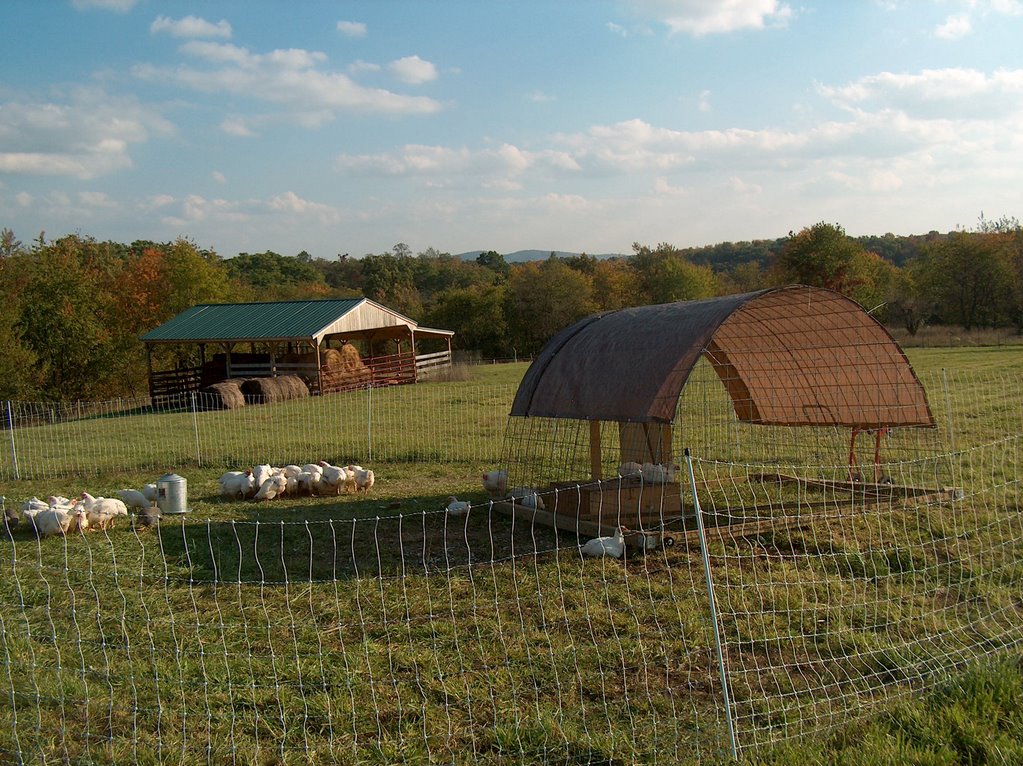 They always had plenty of fresh grass to eat and a constant supply of clean water. Grass and other leafy greens contain a high level of Omega 3 fatty acids - the healthy kind, so these birds are much healthier than ones grown in feed lots or crowded cages like in commercial facilities. Grocery store chicken has been packed in salt water and MSG so it can tenderize while its being transported to the store. Our chicken has no additives or preservatives and will not taste salty like commercially raised and processed chicken. The meat tastes clean and fresh. There were no antibiotics or other harmful additives in our feed. The feed is just ground grain which we purchase at French's Mill in Augusta, WV. Some people always ask about processing. Our birds were processed at an Amish on farm commercial processing facility near Waynesboro, PA, called Berry Blossom Farm. If you are interested in purchasing some chicken, just contact us. They will go fast. Thank you.
Wednesday, November 01, 2006
Hungry Planet: How the World Looks at Food
Some good info and references here. - Steve M
~Wed~ Nov 1st 2006
~Wed~ Nov 1st 2006
“How we eat determines, to a considerable extent, how the world is used,” wrote Wendell Berry in What Are People For?, his 1990 collection of essays about the individual and community. Berry is one of my heroes: a Christian philosopher-farmer from Kentucky. He’s one-of-a-kind.
Sierra Magazine, published by Sierra Club, features a series of articles this month on how the world looks at food. You don’t have to agree with the Sierra Club’s politics and aims to get useful information from these articles. They include:
- “Cheap Food Nation” by Eric Schlosser (author of Fast Food Nation). “Americans spend a smaller percentage of their income on food than anyone else, but it costs us dearly.”
- “Produce to the People” by Constance Matthiessen and Anne Hamersky. “Community gardens and farmers’ markets challenge convenience stores and fast-food joints.”
- “From Cotten to Collards” by Mark Winne. “To combat obesity, Alabama turns to farmers’ markets.”
- “Ten Ways to Eat Well” by Bob Schildgen. Ten food commandments (that tend toward the “green” side of things).
- “Secrets of the Supermarket” by Paul Rauber. “Navigating the health claims, environmental woes, and marketing myths of a modern grocery store.”.
- “Truth in Labeling” by Jennifer Hattam. “Everyone’s making food claims these days. Here’s a guide to all those seals and symbols.”
- “Home Cooking” by Gary Paul Nabhan. “A radical proposal for really local eating.”
- Discussion questions for Michael Pollan’s recent The Omnivore’s Dilemma. (Which I mentioned previously.)
I found the last page of the magazine most interesting of all. It simply features four photographs of families from different countries, each displaying a week’s worth of food.


These photographs are from the book Hungry Planet: What the World Eats by Peter Menzel and Faith D’Aluisio.
Monday, October 30, 2006
Pesticides in your Food
I got the following information from the World's Healthiest Foods web site (www.whfoods.org) They put out a good email newsletter. To avoid consuming pesticides in your food you may want to be very careful about the foods on the first list. Even if you buy directly from the orchard or farm, you may be subjecting yourself to a lot of unhealthy contamination. Peaches and apples often get 15-20 separate sprayings per season. It is very difficult to find an organic orchard. For our fruit trees we are adopting organic methods instead instead of toxic pesticides, fungicides, insecticides. None of our small fruit crops, for ex raspberries, blackberries, etc are treated with pesticides.
WorldsHealthiestFoods
While we recommend enjoying organically grown food, sometimes organic foods are not readily available or accessible. We have previously shared with you the Environmental Working Group's list of "The Dirty Dozen" - those foods that have been found to be the most highly contaminated. This week we want to share with you their latest updated version of this list. Red raspberries and have been removed from the list while lettuce has been added. The Environmental Working Group's simulation of consumers eating high and low pesticide diets showed that it is possible to decrease exposure to pesticides by 90% by avoiding those foods that are the most highly contaminated and selecting those that are the least contaminated.
| The Dirty Dozen | |
|---|---|
| 12 Most Contaminated Fruits and Vegetables | |
| pesticide load | |
| Peaches | 100 (highest) |
| Apples | 89 |
| Sweet Bell peppers | 86 |
| Celery | 85 |
| Nectarines | 84 |
| Strawberries | 82 |
| Cherries | 75 |
| Pears | 65 |
| Grapes (imported) | 65 |
| Spinach | 60 |
| Lettuce | 59 |
| Potatoes | 58 |
| 12 Least Contaminated Fruits and Vegetables | |
| pesticide load | |
| Onions | 1 (lowest) |
| Avocados | 1 |
| Sweet corn | 2 |
| Pineapples | 7 |
| Mango | 9 |
| Asparagus | 11 |
| Sweet peas | 11 |
| Kiwi | 14 |
| Bananas | 16 |
| Cabbage | 17 |
| Broccoli | 18 |
| Papaya | 21 |
These lists are a great tool to help you make the best choices to avoid pesticide residues when you purchase conventionally grown foods from your local market.
Sunday, October 22, 2006
Romney Farmer's Market


Well the farmer's market season has wrapped up for the year. We would like to Thank all of our customers that visited us at the market this year! We met a lot of nice people at the market. Lots of folks are indeed getting into the fresh and local spirit with their fresh food purchases. Unfortunately, the market is still not very well publicized although there was one article in the Hampshire Review about mid way through the season. Ruth did get her picture taken at the market which was printed in the Cumberland Times. Just as a reminder, the Romney Farmers Market is held Saturday AM from 9 AM until 12 Noon on Main Street (Route 50) in the Bank of Romney Community Center parking lot. Its right across the street from the Sheetz store. There are always a few vendors, and at the peak as many as 6-8 vendors, at the market. The market season runs from about Memorial Day until mid October. The market was really well attended around mid July when some vendors had local corn. That seems to really bring the market traffic out. We had plenty of tomatoes then, including Brandywine heirloom tomatoes. Fresh tomatoes are another must have item for most people attending the market and we sold out most times. I've included a few photos of our market stand for you to see.
Subscribe to:
Posts (Atom)


 Posts